
The Light of Bones in the River
A summer reverie for autumn evenings.
One evening this summer, I went for a walk at dusk, my favorite time of day, hurrying along through the golden meadows, the poplars, and the walnut trees along the path that leads to the Loire, to one of those secret and hidden spots known to the locals, where you can stand right at the water’s edge and watch the current as if inside it. From where I stood on the bank, I could see swans slowly swimming along the shore, a kingfisher startled by my arrival, fleeing farther away, and a few terns and white egrets flying in small groups through the humid evening air. Everything was calm and tranquil, yet everything was teeming with life, resonating throughout my whole being. This noisy silence of the living world that always comes to soothe the restlessness in my mind and calm the fear beneath my skin.
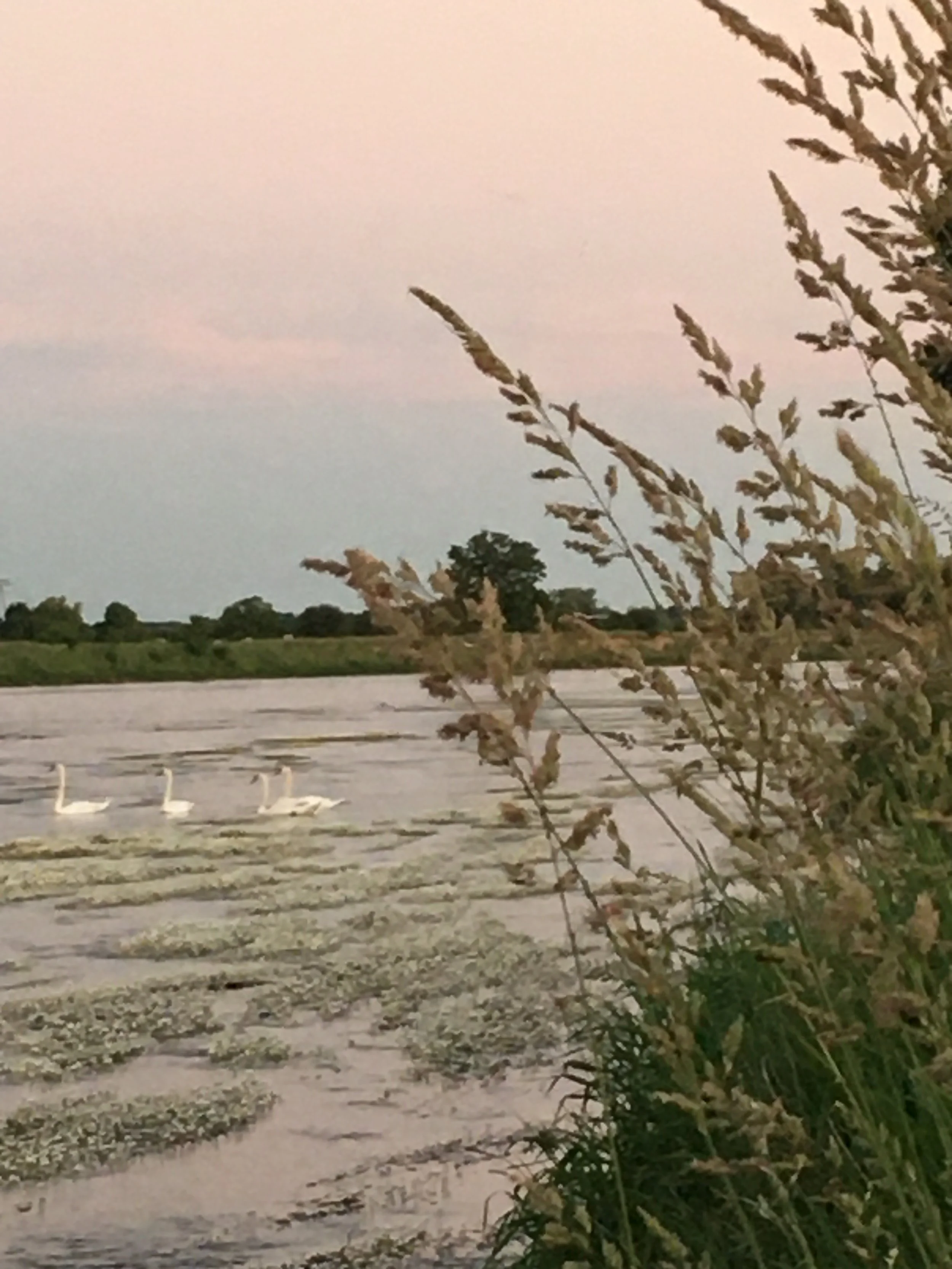
The sky was a soft pink that evening, and on the wet bank, thousands of shells mingled with the sand and the muddy silt characteristic of this place, forming layers of different beige and brown colors. The clear water was low and suffocating under the relentless climatic conditions of this summer, now etched into our memories. One could easily have walked across the river because of the drought, the fires, and months of heatwaves. In the first few yards descending into the riverbed, you could see all the way to the bottom: the stones, the plant fragments, the insect larvae, and the tiny fish fry playing among the strands of duckweed and aquatic plants growing there. There were little islands of greenery right along the bank, where blue dragonflies played at chasing one another, and farther out, rocks whose sharp edges emerged in the middle of the current, where the water was slightly deeper. I thought I caught sight of a beaver on one of them, but I didn’t have my binoculars.
As I knelt down to look closely at the life in the water at my feet, I saw large fish vertebrae lying there, bigger than my hand, half pearlescent, half dark. The shape of these luminous bones fascinated me, with their hollow central circle and three long dorsal spines, probably belonging to an enormous old carp, like the ones sometimes found here. I counted at least seven vertebrae, some still almost intertwined in their natural sequence, others lying alone and scattered a little farther around them by the current.
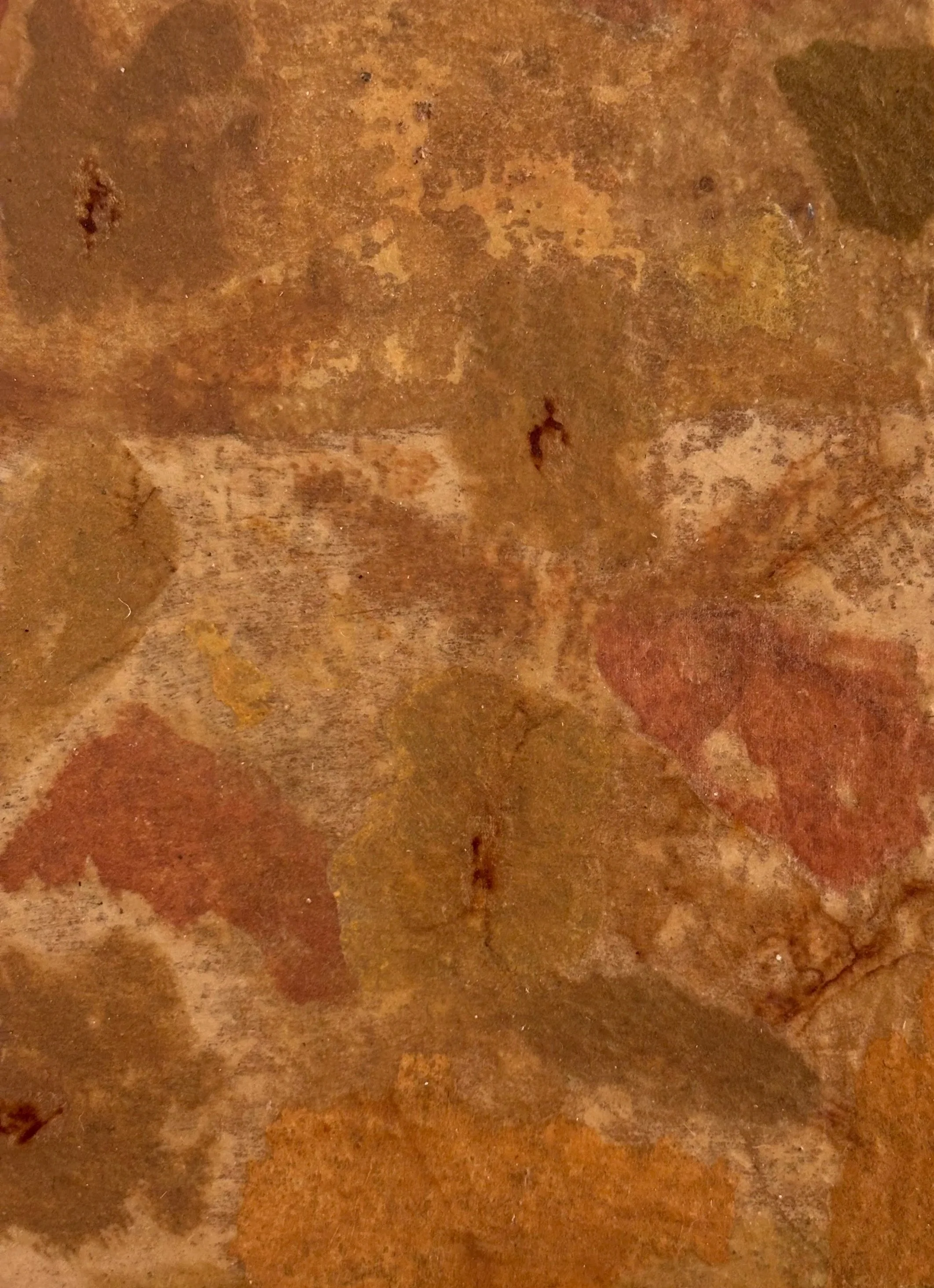
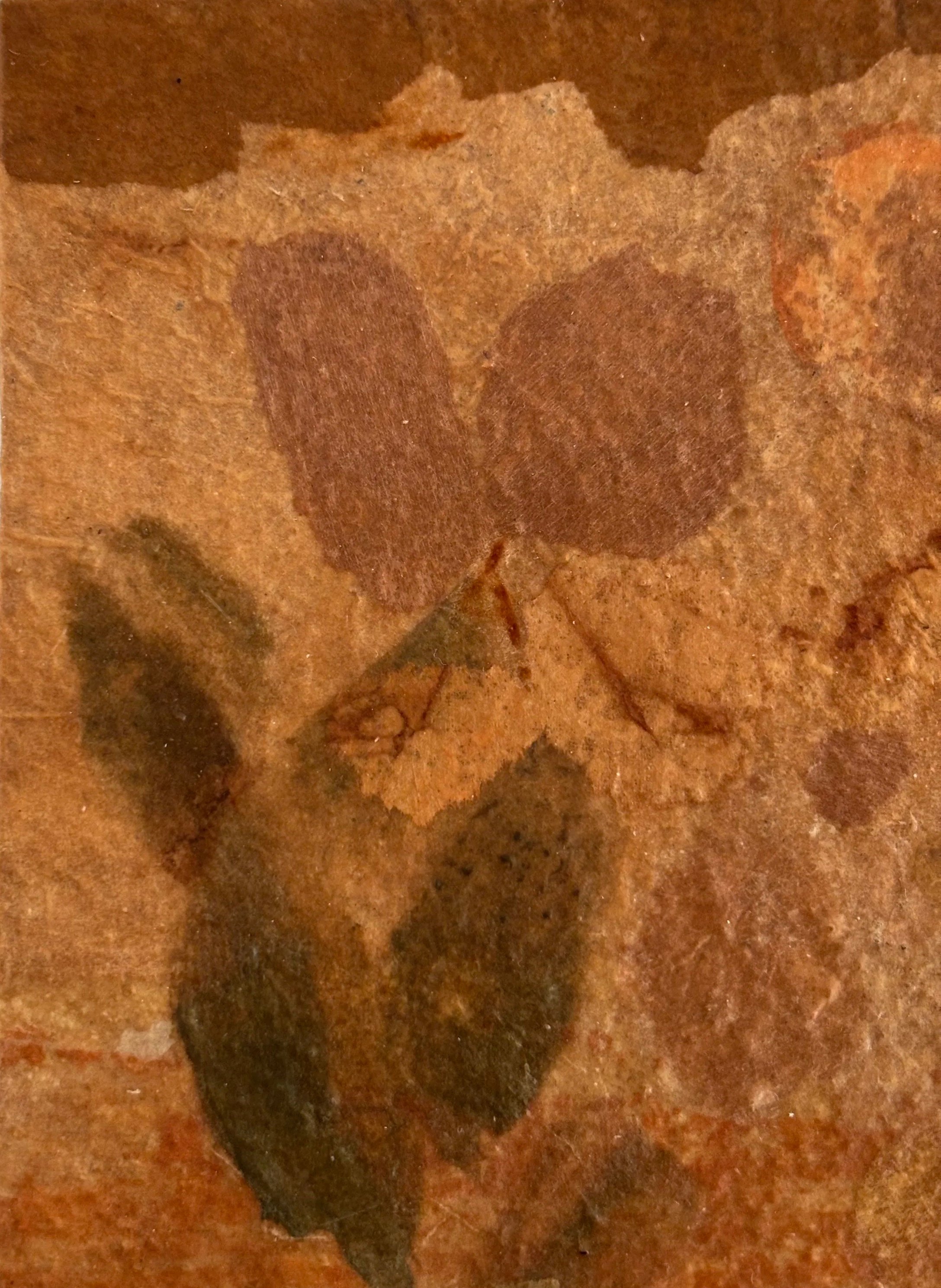
Above: Flower Fossils III and Flower Fossils I
When I returned home, the poetry of this little living sanctuary came to nourish my days in the studio. Images sang in my mind: layers of earth, warm fragments, tender and abstract forms. In the presence of these vertebrae, I found something that also draws me to the petals in my Flower Fossils series, those forms that seem to have traveled through time, held within layers of clay and colored deposits. There is something comforting about imagining a creature resting there, among the traces of lives long past, nestled in this earth where life does not quite disappear, but transforms, settles, and joins everything that came before it.